🪐 SpaceX Starship and the Future of Interplanetary Travel: Mars or Bust?
🚀 Introduction: From Earth to Mars — The Starship Dream
Once a sci-fi fantasy, human travel to Mars is now a serious engineering goal, and SpaceX is leading the charge with its most ambitious project to date: Starship.
Designed to carry humans to the Moon, Mars, and even beyond, Starship isn’t just a rocket — it’s the future of interplanetary travel. But how close are we really to that red planet touchdown? And can one private company change the destiny of our entire species?
Let’s dive into the Starship mission, its tech, goals, and what it means for life beyond Earth.
🧱 What Is SpaceX Starship?
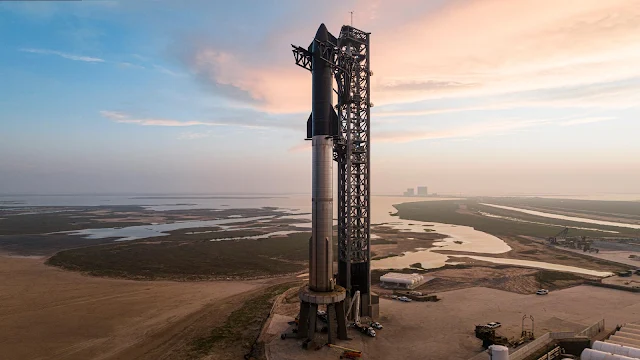
Starship is a fully reusable next-generation rocket being developed by SpaceX for deep space missions.
🔧 Components:
-
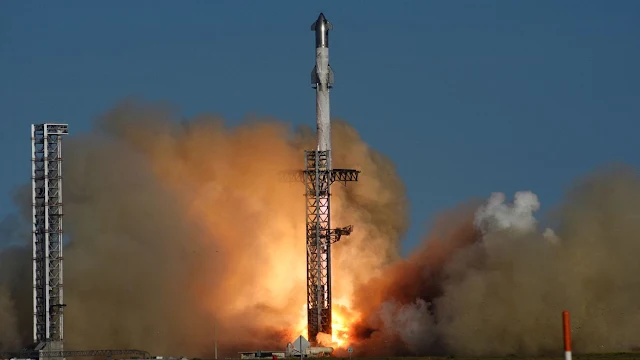
Super Heavy Booster (first stage): Provides liftoff power with 33 Raptor engines.
-
Starship Vehicle (second stage): Carries cargo or crew and re-enters Earth or lands on Mars.
🛠 Lifting Capacity:
-
Up to 150 tons to low Earth orbit
-
Refuelable in orbit, enabling long-distance travel to Moon and Mars
🌍 Height: 120 meters
🔥 Thrust: ~16.7 million pounds — more than Saturn V, the Apollo Moon rocket
🌟 Why Starship Is a Game-Changer
 Public Power Engage
-
Fully Reusable:
-
Just like airplanes, Starship is built for rapid reusability, drastically cutting launch costs.
-
-
Scalable Missions:
-
Designed to carry 100+ people or massive cargo.
-
-
Multi-planet Potential:
-
From launching satellites to building a Mars city, Starship is built for the long haul.
-
-
Environmental Goals:
-
Methane-powered Raptor engines can be refueled using resources on Mars (ISRU tech).
-
🧪 Milestones So Far
📅 Key Events:
-
2020–2021: Suborbital hop tests (Starship SN series)
-
April 2023: First orbital test flight (IFT-1) — ended in explosion but yielded vital data
-
March 2024: IFT-3 test flight — most successful so far, achieving stage separation and partial re-entry
💡 Each test brings SpaceX closer to the dream of Mars flights and Moon landings.
🔴 Mars: The Final Frontier?

 Space
SpaceElon Musk has repeatedly said:
"We want to make life multiplanetary."
SpaceX’s Mars Plan Includes:
-
Uncrewed cargo missions by mid-2020s
-
Crewed Mars landing goals in early 2030s
-
Building a self-sustaining Martian city by 2050
-
Fuel depots and refueling stations in space
Starship is central to all of this. Without it, Mars remains a distant goal.
🌌 Challenges Ahead
It’s not all rocket fire and glory — there are serious hurdles:
-
Radiation Protection:
-
Mars lacks a magnetic field, exposing astronauts to cosmic rays.
-
-
Life Support Systems:
-
Starship must support human life for months — food, water, air, health.
-
-
Landing Large Payloads on Mars:
-
Mars' thin atmosphere complicates landings.
-
-
Psychological & Social Risks:
-
Months of isolation in space with limited communication
-
-
Funding & Regulation:
-
SpaceX needs continuous support from investors and regulatory bodies
-
🤝 Starship in the Global Space Race
-
NASA has picked Starship as the lander for its Artemis III mission to return humans to the Moon.
-
Competing Technologies: Blue Origin’s Blue Moon, China’s Long March-based crew systems
-
Collaborations: Starlink revenue, partnerships with NASA, possible ties with ESA
👽 Why This Really Matters

If Starship succeeds, it could:
-
Make Mars habitable
-
Lower space costs worldwide
-
Boost interplanetary science
-
Inspire a new generation of engineers, dreamers, and settlers
More than a rocket, Starship is a symbol — of hope, exploration, and human evolution.
🛸 Conclusion: Mars or Bust
With its jaw-dropping power, reusability, and a vision backed by billions, SpaceX Starship stands as humanity’s best bet for setting foot on Mars.
We’re not just watching history unfold — we’re launching it.
So buckle up. Whether it’s 2030, 2040, or 2050… Starship’s countdown has already begun.
Slug: spacex-starship-mars-mission
Focus Keyphrase: SpaceX Starship Mars mission
Meta Description: SpaceX Starship could take us to Mars. Discover how this revolutionary rocket may unlock the future of interplanetary travel.



No comments:
Post a Comment