
On February 27, 2025, SpaceX's Falcon 9 rocket successfully launched the IM-2 mission, marking its second lunar endeavor of the year. This mission, orchestrated by Intuitive Machines, aims to explore the Moon's south pole, particularly the Mons Mouton region, to assess the presence of water ice and other vital resources. The insights garnered from this mission are pivotal for future lunar explorations and the establishment of a sustainable human presence on the Moon.
Introduction
The quest to explore and utilize lunar resources has gained significant momentum in recent years. The IM-2 mission, launched aboard SpaceX's Falcon 9, represents a collaborative effort to delve deeper into the Moon's potential, particularly focusing on its south pole region. This mission not only seeks to uncover essential resources like water ice but also aims to demonstrate advanced technologies that could revolutionize future space explorations.
Mission Overview
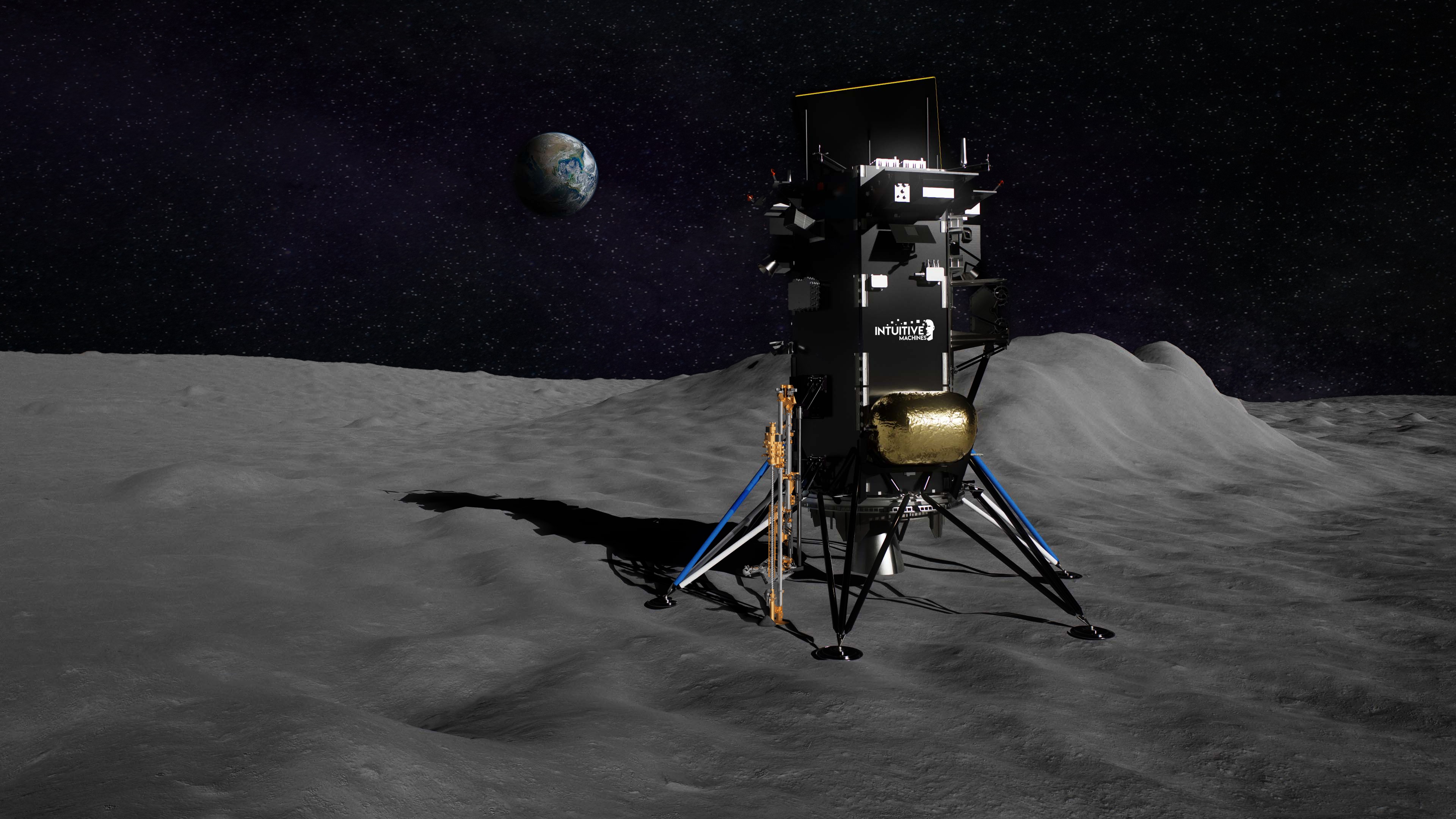
Intuitive Machines, a Houston-based aerospace company, leads the IM-2 mission as part of NASA's Commercial Lunar Payload Services (CLPS) initiative. The mission's primary goal is to deliver the Nova-C lander, aptly named 'Athena,' to the lunar surface, carrying a suite of scientific instruments and technology demonstrations. The data collected will provide invaluable insights into the Moon's composition and resource availability, laying the groundwork for sustained human exploration.
Launch Details
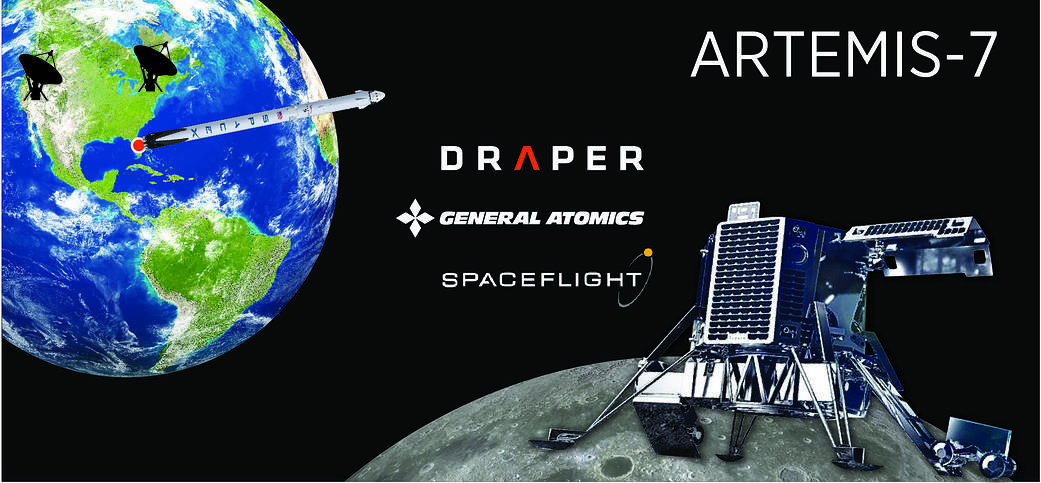
The Falcon 9 rocket lifted off from Launch Complex 39A at NASA's Kennedy Space Center on February 27, 2025, at 00:16 UTC. This launch marked SpaceX's 24th mission of the year, underscoring its pivotal role in advancing lunar exploration. Approximately 45 minutes post-launch, the Athena lander successfully separated from the rocket and established communication with ground controllers, confirming its trajectory towards the Moon. citeturn0search0
Objectives of the IM-2 Mission
The IM-2 mission encompasses several key objectives:
PRIME-1 Experiment
At the heart of the mission lies NASA's Polar Resources Ice Mining Experiment-1 (PRIME-1). This experiment aims to drill into the lunar surface to extract and analyze water ice, a critical resource for future missions. By understanding the distribution and quantity of water ice, NASA can develop strategies for in-situ resource utilization, reducing the need to transport resources from Earth. citeturn0search6
Micro-Nova Hopper 'Grace'
The mission also features the Micro-Nova Hopper, affectionately named 'Grace.' This innovative drone is designed to 'hop' across the lunar surface, allowing it to access and study regions that are otherwise challenging to reach, such as permanently shadowed craters. Equipped with a neutron spectrometer, Grace will search for signs of water ice and other volatiles, enhancing our understanding of the Moon's resource potential. citeturn0search21
Lunar Trailblazer Orbiter
In addition to surface experiments, the mission includes the deployment of NASA's Lunar Trailblazer orbiter. This satellite is tasked with mapping the distribution of water on the Moon's surface, providing a comprehensive overview that complements the localized findings of the PRIME-1 experiment and the Micro-Nova Hopper. citeturn0search1
Significance of Mons Mouton
The chosen landing site, Mons Mouton, is a high plateau near the lunar south pole. This region is of particular interest due to its relatively stable temperatures and potential proximity to water ice deposits. By targeting Mons Mouton, the IM-2 mission aims to explore an area that could serve as a future base for sustained lunar exploration and habitation. citeturn0search21
Technological Innovations
The IM-2 mission showcases several technological advancements:
Nova-C Lander 'Athena'

The Athena lander represents a significant leap in lunar landing technology. Designed for precision landing, Athena can deliver payloads accurately to designated lunar sites, ensuring the success of scientific experiments. Its modular design allows for the integration of various instruments, making it a versatile platform for future missions. citeturn0search0
Micro-Nova Hopper 'Grace'
Grace's ability to traverse the lunar surface by hopping introduces a new method of exploration. This mobility enables the investigation of diverse terrains and the collection of data from multiple locations, offering a broader understanding of the Moon's composition and resource distribution. citeturn0search21
Collaborations and Contributions
The IM-2 mission exemplifies collaboration between public and private entities. NASA's CLPS initiative fosters partnerships with companies like Intuitive Machines to accelerate lunar exploration. Additionally, the mission includes contributions from various organizations, such as Lunar Outpost's Mapp rover and Nokia's lunar cellular network test, highlighting the diverse efforts converging to advance lunar science and technology. citeturn0news14
Future Implications
The success of the IM-2 mission holds profound implications for the future of lunar exploration.



No comments:
Post a Comment